Tuesday, 22 November 2016

Anniversary

Looking back to June 2016:

Peace Corps service is designed to begin with one day of classroom preparation in the US, continue with 2-3 months of in-country training, commence fully with a transfer to a site where the volunteer will live and work for two years, and end when those two years are up.  Some people choose to leave early, some people must leave early for medical or family reasons, and a few choose to 'extend' their service for a year -- in rare cases, more than one might be allowed.  For most volunteers, though, one year at site marks the middle of full service, and thus my volunteer group had a 'mid-service conference' in June 2016.


The sun rises on a second, and maybe last, year of service.


We all went back to the conference center in the mountains outside Windhoek, the capital, where we had had our three-month 'reconnect' conference.  Greiters is gorgeous, though the pool was entirely non-functional this time.  Pfui.  We had a Sunday afternoon of reconnecting, and then two days of sitting around conference tables sharing successes and frustrations and being reminded that monitoring and evaluation of those successes and failures is really important so let's get it right, people.  Also, huge starchy/meaty meals and evening bitch-and-giggle fests.


Tea break with tasty little sweet muffins.  Tea break is at 10am,
because we are upside down here in the southern hemisphere.


On night two they loaded us all into combis and drove us to the ambassador's house.  We met the ambassador, Thomas Daughton, in our first week or so as trainees.  He and his wife, Mindy Burrell, are very interested in the work PCVs do in Namibia, and they graciously invited us over to learn more about it.  It was just a reception, not a dinner, and I don't know whether they were astounded by the quantity of artichoke dip (so good!), black bean stuff, brownies and finger meats we got through, but the crowd around that dip impressed the heck out of me.  They gathered us all up at some point and asked us to share success stories Mr. Ambassador ("He'll introduce himself as Tom, but we call him Mr. Ambassador.") could use at the embassy's upcoming Fourth of July celebrations.  Then they turned us loose on the house, decorated with contemporary American art, as are all embassies, but here of the southwest, as Mr. Daughton is a native Arizonan.  I got to chat at some length with Ms. Burrell, and would have loved to get to know her better.  She specialized in refugee issues, and worked in several conflict zones before meeting her future husband -- I think in Beirut.  My boss's boss snuck a Sierra Nevada out at the request of his boss, our country director.  You don't get a lot of Sierra Nevada in Namibia, at least not outside the U.S. embassy and its staff housing. Peace Corps is not part of the State Department.


Mr. and Mrs. Ambassador listen to PCV stories.

Boss's boss makes a funny face when he sees a camera.  Very professional.


Night three we had a chance to sit down with our director of programs and trainings to talk about why we serve.  He is Patrick, of the shaved head in the photo above, and he served in PC in Tanzania about ten years ago.  His commitment to service, and to Africa, is almost visible in the set of his shoulders or something.  He's worked for PC for a few years, and he's realistic about the pros and cons.  Since many volunteers crack up a bit around the one-year mark (They have a chart that shows the danger points; it's called the cycle of vulnerability and adjustment.), he wanted to give us an opportunity to remind ourselves and each other why we're here, and why this work has value.  He does it in an entirely unjudgmental, no-preaching, open-minded and supportive way, and I think he's great.  If you ever have a chance to hire him, do it.  Peace Corps staffers have to leave after five years, so he may be up for grabs soon.


"Different people have different experiences," they tell us.  "This is a common pattern, but yours may be different."
I have mostly been a lot less mood-swingy than I would be in the USA to date.


The next morning they shoved us back in the combis and drove us to an hotel in downtown Windhoek.  We had three days of medical appointments scheduled!  Everyone got a dentist appointment and a brief conversation with the PC medical officers to make sure we had no major complaints.  A few people with medical issues had pre-booked appointments with specialists, and a few got specialist appointments while we were there; others would have to stay extra time or come back later for specialists.  There aren't a lot of medical specialists outside Windhoek, Swakopmund, and the Oshakati-Ondangwa-Ongwadiva area.  I got a chipped filling repaired and the best tooth cleaning ever.

Windhoek in the distance, last morning at Greiter's.

Sunrise of Namibia


In our down time, we hung around the PCV lounge and charged around shops and restaurants and movie theaters -- always in taxis after dark, since Windhoek is a high-crime town, although two of our vols were in a pretty bad taxi crash the night before the conference started.  On Friday and Saturday we had orgies of hugs and good wishes, and everyone split off to their various hike points and headed out for one more year, feeling tired and revived and inspired and annoyed and really, really clean around the teeth and gums.

 
The lounge

The courtyard at PCN HQ

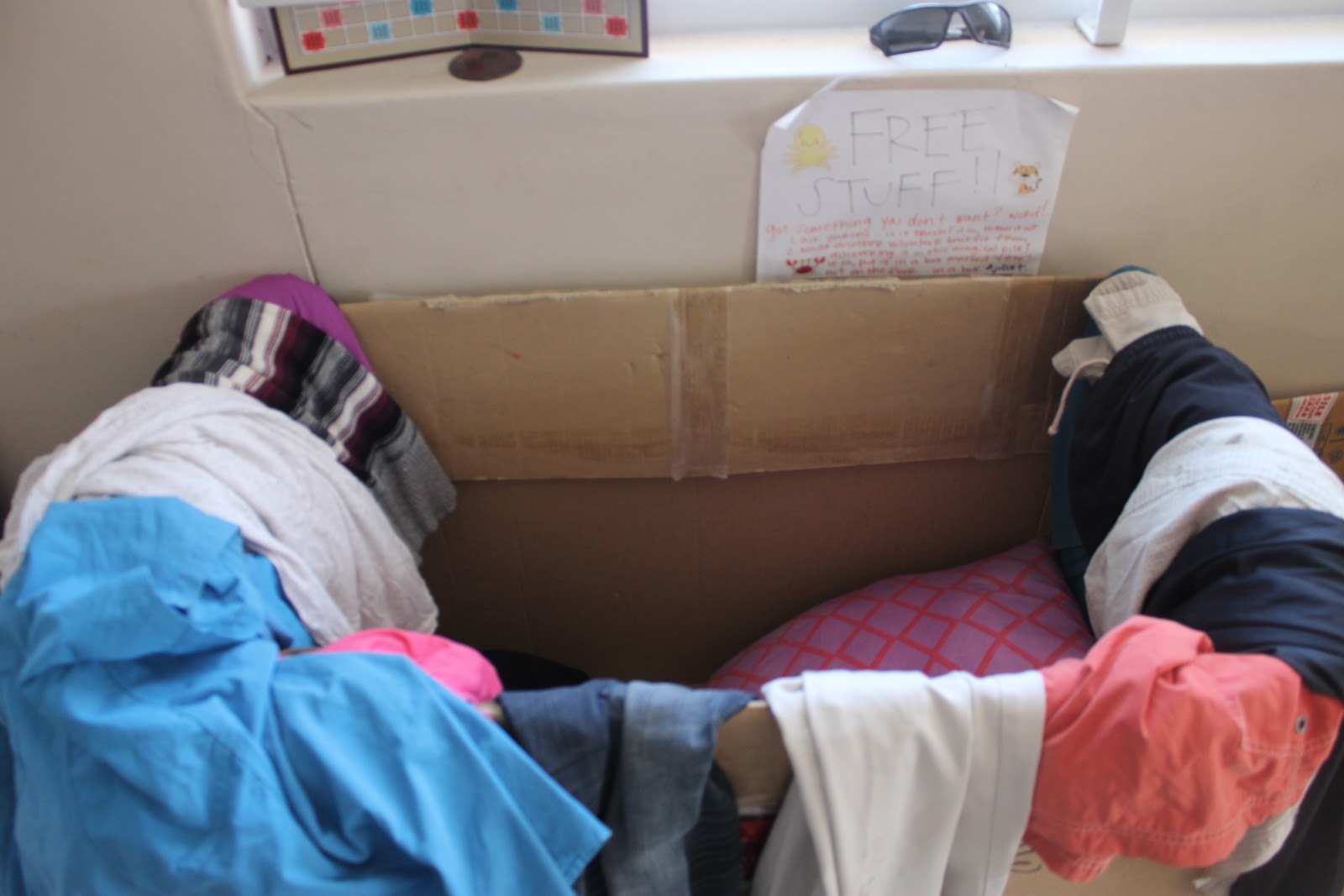
The free box at the PC lounge.  I scored a cute dress that M. borrowed right away.

Ninth-floor roofdeck!  Most of us haven't been that high up in over a year!
(Except the skydiving, of course.)

Sunset over Windhoek

Indian dinner at Garnish

Not the world's most exciting nightclub, but fun.


Friday, 18 November 2016

I Am A Resource

Looking back to May 2016:

Each April, and again every August, a group of mostly-young Americans debarks from a looong flight at Hosea Kutako International Airport in Windhoek, Namibia, to embark on the glorious journey that is in-country Peace Corps Pre-Service Training (PST).  (Chief Kutako was  a soldier, prisoner, teacher, miner, paramount chief of the OvaHerero, and one of the drafters of the first Namibian petition for independence sent to the United Nations.  Among other things.  Click the link; it's an inspiring story.)  The April trainees are part of an odd-numbered group -- mine was 41 -- serving in community economic development and community health and HIV/AIDS prevention (CED and CHHAP, respectively).  The August trainees are even-numbered and serve as teachers, with a very few in education-related administration or training positions.

Group 41, mine of April 2015, benefited from the services of a number of volunteers who'd been serving for a bit less than a year or two, who came to our training facility for a week at a time and were called Resource Volunteers.  Alicia and Julia were two of the first PCVs I met in Namibia, and they were great.  They and Kaitlyn, Aaron, J.T., and a handful of others provided some of the most useful, practical, applicable info I got at PST.  As with the shadowing experience, when it came time for us Group 41-ers to be Resource Volunteers to April 2016's Group 43, I was glad to apply.  It's that service mentality; that gratitude thing.  Okuhepa.

There's a couple of Group 41 Resource Vols at the back of the room here.
They kindly returned to Okahandja for our swearing-in ceremony.


In early April 2016, I gathered with a group of colleagues at the training center in Okahandja for Training of Trainers.  It was not the best-organized or most-useful of events, which was disappointing, but it was good to see PCVs I love, a few language trainers I admire and respect, and meet some new language trainers.

About four weeks later I went back to Okahandja to be Resourceful for Group 43's Week Three of PST.  They had 18 CED volunteers and 15 CHHAP volunteers, including a sound engineer, a community organizer, an M&A attorney, a DJ (and small businessman; he had run his deejaying business himself) and a clutch of social workers.  Cool.  Linda the Magnificent, my PC boss, had devised a diabolical learning scheme by which the new CED trainees would train themselves.  They had materials from which to learn about things like bookkeeping, creating a business plan and conducting feasibility studies, and they had to learn those things and then teach them - to each other and to a group of the language facilitators, who are all Namibians, albeit with much better English language skills than is the norm here.  So it was great practice for conducting trainings at site.

Gosh, Resource Volunteering gave me all kinds of flashbacks.
Peanut butter and brodjes for tea!  Yaaaaaaaah!!!

The magnificent Linda shows how training is done, y'all.

Cross-cultural conversation out by the bees.  This one was about gender
norms and sexual relationships.  Tannie Martha played the role Mama Rosa
took with my group, of the mother who is thrilled her daughter has attracted
a rich American who will marry the girl and buy the parents a Land Rover!


Week 3 included Cultural Cooking Day, which included our janitor/all-purpose
woman Melodia's awesome fatcakes WITH RAISINS

and a whole lot of other food, some of it still quite new for these trainees.

Thank goodness, and Melodia, for raisiny fatcakes, 'cause it's going to take a
very lot to get me to eat a 'smiley' -- that's the goat's head Afrikaans teacher
Joel is waving jubilantly here.  Guess why it's called a smiley...

I loved working with the trainees, which mostly meant providing feedback on their trainings ("Talk slower."), and felt energized and optimistic about their skills and commitment.  I felt, too, like I had forged the beginning of something like friendship with a few of them.  A few weeks after I got home, Linda phoned and told me that, very sadly, one of my colleagues was suffering medical issues and wouldn't be able to take his week as a Resource, and asked if I could fill in for him.  I agreed readily, although it's a bummer of a hike and PCN doesn't provide their Resources with an allowance to cover the higher cost of feeding ourselves while living in a kitchen-less dorm room, so meals got pretty pricey, too.


Plus I got to climb a little mountain outside Okahandja.  It had been
far too long since I climbed a little mountain.


Man, am I glad I agreed.  I shipped back to Okahandja with a few shadows, and installed myself back at the dorm-style guest house.  I greeted everyone happily the next morning, and did my best to share what I'd learned in my first year at site.  On maybe Tuesday or Wednesday, one of the training staff gave me the full report on the mid-training evaluations, where I learned, among other things, that at least six trainees had found me dramatically, painfully unhelpful and unlikable.  Ouch!

After considering my options, and running a plan past staff and a trainee who'd come to Namibia out of an unusally enlightened corporate HR team, I chose to speak to as many of the trainees as I could, one-on-one, to apologize.  I told 22 or 23 of the 33 that I was sorry to have disappointed them, that my intention was never to cause distress but instead to share my joy in my Peace Corps journey and support them in theirs, and that I would find it very helpful to know what, specifically, I had done to warrant negative feedback.  I also asked them to share my apology and request with others, as I didn't think I would reach everyone.

A couple shared ideas with me, which were very helpful.  (Many said they had no problem with me and appreciated my taking time to apologize, and a few were kind enough to tell me they found it brave.  What else could I do, though?  I hurt people I wanted, quite enthusiastically and unconditionally, to help.  This sucks.)  What I believe as a result of this is that I had, foolishly, underestimated the degree to which some of the trainees, especially in just their third week in training, needed soothing, comforting presences around them.  While I tried to provide that, one early incident in particular came across to some of them as insensitive and officious.  I guess it wasn't important enough that anyone chose to talk with me about it, or express their concern to my co-resource, but unpleasant enough that they recalled it at evaluation time.

Group 43 put on a great Market Day in week 7, which included this very
talented sandal-and-purse-making entrepreneur.


I am so happy to have had the chance to mend, to a small degree, some of those fences.  Gosh, I hate needing to apologize, but doing it when necessary is so much better than leaving the harm unaddressed.  Plus, this is valuable life-lesson stuff. Loving the life lessons, everyone! I just hope I can keep them with me.

Friday, 11 November 2016

Shadows Enlighten

Looking back to May 2016:

Most PCVs will tell you that 'shadowing' was one of the most valuable parts of their pre-service training.  I both enjoyed and learned from my shadowing experience toward the end of PST, and was delighted to have a chance to pay it forward when Group 43 came to Namibia.

Given a generous house, I was able to host three (could have done four) shadows, and given a paucity of current, available volunteers versus trainees, my PC boss, Linda, was happy to send three.  I got an M&A lawyer from Chicago, a DJ and entrepreneur from same, and a realtor and gem expert from Boston, all of them interesting, well-mannered and excited to be serving.  All, also, as is usual, very excited to be nearing the end of their training!

Groceries to feed the shadows came from Dreamland.

Before they arrived, we e-mailed with ideas about scheduling and meals, and I told them how much of their shadowing allowance I would usurp to cover the extra groceries.  I also asked if they'd want to spend their last night in Swakop, and they were all very pleased to have that opportunity.  So I booked a dorm room at Amanpuri; two hundred bucks each and worth it.

Shadows do their initial travel in groups, with a local PC facilitator to help them in working through the mysteries of hiking, and mine SMS'd when they got close.  I walked down to the filling station that also serves as a transport hub, and was able to wave to Tante Martha, Afrikaans teacher and PC stalwart, as her combi full of PC trainees swung into town.  I had bumped into a local entrepreneur at the station, so introduced the shadows to him as soon as they debarked, and we had a brief conversation about his business and the opportunities and challenges of our town.  Good start, right?


I mean, seriously packed.

For day one, we settled into my house and had some cheese sandwiches, and then  packed ourselves into kind Petra's car and headed to the crystals market.  They looked around the operation, talked to members, helped consult on some computer questions and bought some jewellery, good them.  The former realtor was scheduled to work with a local small-scale miners' group, so this visit was especially useful for her.  Then we went to see Johanna in nearby Usakos, who was on the verge of closing her PC service after three years and one venomous snake bite.  I presented her with a certificate (certificates matter here) and some brownies, and the shadows got to see what my fellow community economic development volunteer M. gets up to at the Children's Education Center.  Back at home we had lentil soup and bread for dinner; pretty typical.

On day two we went to the office, met everyone there, used the library wifi.  The shadows got lunch at the local market, which consists of variously-stewed meats and vegetables.  You pick up the lids of the many pots and request a scoop of spinach or macaroni or carrots, and that piece of chicken, etc., and pay $5 a scoop for veg and starch, and $15 and up for chicken or meat.  In the evening we went for a sunset desert walk and then had pap and chakalaka for dinner - quick, easy, very Namibian.  The DJ hadn't cooked much, ever, and was pleased to have a pap-whisking lesson.  (Pap is a white-corn polenta or corn-meal mush, essentially; blander and probably less nutritious than the yellow-corn kind of Italy.)

Filling and oh so traditional luncheon at the market.

Shadows in the sunset.

On Friday we went to Dreamland Garden, discussed and toured their operation, and pitched in with weeding, litter pick-up and spinach harvesting.  Great hands-on experience, I hope, after their six or seven weeks sitting in classrooms.  We also met with another local entrepreneur at my office, and the three shadows grilled him enthusiastically.  One shadow had a host brother attending the local vocational school here, so we invited him for dinner and sat outside eating homemade pizza, with wine contributed by the kind shadows.


I had booked a ride for Saturday morning with a taxi driver I know -- four of us is a full load, and the shadows were happy to take the easy option rather than fool around with hike points and waiting.  They, of course, loved Swakopmund, which that weekend offered the unusual excitement of containing several dozen other PCVs.  The group before mine was having its close-of-service conference there, and the young-leaders camp committee was meeting, and the five existing Swakop PCVs were hosting a total of four Group 43s, so you could not get two blocks without bumping into a PCV.  We grouped and ungrouped throughout the day and sometime toward the end of it found many of ourselves in a new dance club, where we meeted and greeted and foxtrotted (not really) the night away.

Shadow with shadows of his own.

Next day we had a *fun* time getting a hike back to Okahandja, the training town!  I took the back seat and recommended they confirm pricing before we left; the driver initially said he'd charge $260 for each of us, when the going rate is $130.  So that was an invaluable experience, I think.  Plus it was a pretty uncomfortable vehicle, and I lost my phone.

I have had great experiences on both sides of PST shadowing.  I am really grateful to my shadow host, and to my three shadows, for their generosity, flexibility and wisdom.  And I am hopeful of getting to do it one more time, in May 2017, when Group 45 is here.

Monday, 31 October 2016

A Lovesome Thing

Looking back to May 2016:

Dreamland Garden is an ambitious enterprise:  a garden in the desert.  For a person reared in New England (dark, rocky soil; okay for planting; short growing season) and recently expatriated from the mid-Atlantic (insanely fecund), nothing in Namibia looks garden-able.  The south is rock and sand and no rain, with blazing summer heat and freezing winter nights; the north is deep sand with four months of downpour, eight months of dry, and hot, hot, hot most of the year.  However.

Seriously, is your first thought, "Let's plant some cantaloupes!"?

Namibians have figured out how to grow stuff.  And Patrick, our Peace Corps Namibia Director of Programs and Training, is not intimidated by anything!  He served in Peace Corps in Tanzania in the Agriculture program about ten years ago, and now gardens here in Namibia.  Namibia has a few more (like, a billion) gardening challenges than Tanzania, but he is digging in (ha ha) and getting the thing done.  And he likes training us newbie volunteers, too.


Where shall we put a garden?

So in May he hosted a permagardening workshop for the southern PCN contingent, and about 12 of us made our ways to Otjiwarongo, where T. volunteers as a PCN teacher.  His school was allowing us to construct a garden on their grounds during vacation week.  T. had promised Patrick that the soil was dreadful, and by T's mid-Atlantic standards no doubt it was.  By my Namib Desert standards, it was Eden.  Patrick also felt doubtful of a real challenge to vegetative flourishing.

Positively brown, that Otjiwarongo soil.  Paradise.

We had three days, and spent a few hours of each in the conference room, with Patrick teaching us about the correct ratio of nitrogen to carbon in our compost, which plants cross-cultivate best with which others, the academic understanding of double-digging and other invaluable topics.  Then we drove out to T's school with a full load of tools and materials, and Patrick tried to share his eye for scrounging valuable gardening resources with us -- look, cardboard by that dumpster! -- on the way.

First we had to consider sunlight, shadow, distance to water tap and
administrative preference to determine the best location for the garden.

On day one we sited the garden and built a compost pile.

Otjiwarongo has tons of brown and green material you can chop up with a hoe
to start your compost pile.

T. knew where we could find cow poo to add to the compost pile!
(A judicious amount, blended with the leaves and dried grasses.)

Patrick carefully directed the blend of brown, green and manure.

Brilliant!  We covered the pile with straw to help it stay moist.
The kid, Mario (green t), joined us while we were scooping manure,
followed us back to the school, and stuck with us through the workshop.

On day two we double-dug two beds.  The raised one incorporated plant compost, which gardeners in this area do not typically use, and the flatter bed contained just manure and the local soil.  That second approach is the commonest locally.  Thus T. would have a test bed to demonstrate that, most likely, the raised-bed, compost approach works better, yielding more and more fertile plants.  With an hour or so to spare (many hands make light work, though if you only have one pick and two hoes, 12 pair of hands don't make that much difference), we added a third bed and planted all three.

In Britain it's sometimes called 'bastard trenching,' which I love.  And in
Virginia's clay soil, where I double-dug two fair-sized beds solo, it was quite
a labor.  However, I did not have a pick-axe.  Anytime you get to swing a
pick-axe, you have to admit to at least a little bit of fun.

I punched holes in all the soda bottles.  Fill them with water, and it will
gradually leach out into the soil, nurturing your plants.

On day three we fine-tuned our beds, poked at the compost and urged it to hurry, and 'cemented' the modestly decorative rock wall around our raised bed with a dirt-manure-water mixture.
 
 
L., crouching, is flinging a big ball of home-mixed concrete substitute
onto the rock wall.  This was fun, too.
 
Patrick brought all the tools, some pre-fab compost, some marigolds and
other plants, up from Windhoek.  We had to pack them carefully so he
could also get several PCVs into the combi and save us from the horrors
of hiking home again.  At least part way.
 
Ta-dah!

Throughout the three days, we reveled in the magical properties of the Otjiwarongo Super-Spar (big supermarket), the limited wifi and miniscule wading pool of our lodge, and listened or, maybe, sang along with K. and others as they tore off 'She Thinks My Tractor's Sexy,' 'Seasons of Love,' the Spongebog Squarepants theme song, 'Let It Go' and other seemingly random selections of musical pop culture.  Ah, you guys are fun.

Now I am working to share some of these ideas with Dreamland to help them increase production and stave off insects (stupid insects; go someplace fertile).  I haven't had an update from T. yet on how the garden's doing, but I'll share this post with him and ask.

Sunday, 23 October 2016

Not My Idea of an Adventure, but Something New

Some of my earliest memories are of dogs, and few of my childhood memories are dogless.  Mum loved dogs; Dad tolerated them, and all my many siblings delighted in them.  I hope.  Life in a seven-dog-plus-probably-some-puppies household would have been pretty miserable for anyone who didn't delight in them.  Honestly, I feel a strong affection for the lovely, black-and-tan female dog in my neighborhood who has decided my yard is the right place to bring her snacks.

Her snacks, however...  This element of life in Namibia seriously has, I think, no parallel in any of my previous life experience, which is a surprise.  It's a pleasant surprise to know this is something that can happen in your life, and it hasn't happened before in mine.  It is no longer, sadly, a surprise to me to come home to find sights like this in my yard.

Welcome home!

You know what that is?  The white-and-blue spot in the upper left is a diaper, well-chewed; the curvy thing next to the bit of greenery in the lower right is a horn.  Probably a cow's horn.

Why are they in my yard?  We get strong winds in my desert home, but no, these did not blow in through the various fences.  The lovely doggie brings them in, and munches on them for a while, and then departs, leaving her detritus for me to collect.  Yes, she eats significant portions of used diapers.  I get a nasty gag reflex just typing it.  And maybe once or twice a month I have to pull on the gardening gloves and pick up one of those - or a collection of truly bare bones - and turf it into my black plastic for the weekly trash pick up.


Just to be very clear about what I'm dealing with here.

Most houses in town have a dog or two attached; this is commonplace in Namibian towns, where housebreaking is also sadly commonplace.  The dogs are generally not companions or loved family members; they are guardians, ill-fed and rarely washed or brushed, so they become scavengers.  Some get aggressive with people, but almost all will run off if you bend down as if you're picking up a rock to throw.  So how useful are they as guardians, I wonder; but many locals I know are very scared of dogs.  My neighbor dog has her full measure of that skittishness, which makes it very difficult for me to establish a rapport, and clarify for her that, while she is always very welcome to visit, I prefer she do her gnawing elsewhere.

I think there was a wedding in town this weekend, and this is a trophy from a fatted calf. 


I don't like picking up other people's toothmarked horns, either.


The lovely culprit.


I think I'd best resign myself, however.  While, perhaps, keeping a small brain space turning over the question of how to convince Foxy - Matilda - Saddle - what am I going to call her? - to take her nibbles elsewhere.

Thursday, 20 October 2016

Without Music, Life Would Be a Mistake

Friedrich Nietzsche wrote that, in the 1880s, shortly before succumbing to syphilis, manic depression, an hereditary stroke disorder, or something else that manifested with an abrupt collapse in a public square and left him mentally incapacitated for the last ten years of his life.  He was 44 at the time of the collapse, and not widely read, but what he accomplished between 20 or so and 44 made him one of the most influential thinkers in human history.  He was, I contend, correct in his aphorism about music.


looking back to March 2016:
I listen to digital music at home, and I occasionally hear some beautiful, mostly a capella singing from youth choirs, street-corner choirs or Gideon.  Taxis and private hikes usually have music playing from a flash drive or the radio -- Jimi Hendrix once (the driver didn't know him; it was just the radio selection), Adele a few times, African rap often, lots of gospel of various provenances, and frequent doses of electronica/dance stuff.  The skydivers introduced me to Swakopmund's Desert Tavern, which had a good acoustic guitarist playing and singing covers, and a dance club that had two guys playing electric guitars (one flying-V) against a drum machine.  But a truly live band... oh, a live band.

In late March 2016, it had been almost one year since I had seen a live band.  I saw Houndmouth in Philadelphia on 4 April in 2015.  They are great.  I think that was the last full band I'd seen when I noticed, somewhere, an announcement that a four-piece, electric band would be playing that Desert Tavern on Easter Saturday.  There was, of course, a very real possibility that they would be disastrously bad -- that is always a very real possibility with an unknown band.  But I liked their looks, and the name The Fate of Ms H, and I had a yearning and enough frequent-flyer miles to book a free hotel room, so I headed for the big city with a song in my heart.

First I stopped at the COSDEF Center, where PCV S. works.  They were having an Easter festival, and S. was hula-hooping in celebration.  I watched awestruck and then bought a powerful ostrich-shell necklace.

I am a complete incompetent with a hula-hoop, but S. is great.  She's also a
former competitive diver, which I guess means she knows how to twist.


With my new necklace for back-up (this makes no sense in writing, does it?  But in my head, it's spot on), I stepped along to the Tavern around sunset.  Stepping involved tucking my skirt up and splashing through the edge of the Atlantic, which at one point got a bit playful, tried to pin me against some rocks and knocked my reading glasses into the surf.  Oh, ocean.  We have such fun together.

Fortunately I didn't need to read the tavern menu, because I remembered the veggie pizza is called the Popeye, and their drinks all stink so may as well just order a Savanna Dry.  I had seen the band photo, so I could i.d. the lead singer futzing around near the stage, and she looked kind of fun and low-key.  Soon enough she stepped up onto the stage with an acoustic guitar and announced that she'd do a few songs solo, and then the three others would join her, and oh, yes, her name is Heather and she grew up in Swakop.  She's got a great voice -- covered Four Non-Blondes and Tracy Chapman with aplomb -- and admirable stage presence.  She did an original, by audience request, that she laughed was 'dirty' or something like that.  It was good.  The lyric seemed to involve lusting for a woman in a taxi, but I very often get lyrics really wrong.

Ms H moves among her people

Real band.  Seven months later, my heart lifts just seeing this lousy photo.

The full band was well worth the $30 cover.  The bass player was shiny blond (and talented, thank you), the guitarist tastefully understated, the drummer strong.  Every now and again they'd get silly and strike guitar-heroic poses, which seemed to me very obviously tongue-in-cheek and great fun.  They did mostly covers, but again a few originals that showed promise.  And no drum machine.

One of the interesting things, for me, was the audience.  It was, like, Hipster Swakop or something, which I had not seen before.  I suppose, since most of my Swakop time is Saturday afternoons in the Shop Rite, I couldn't really expect to catch the hipsters en masse.  But they were fun to see.  I wonder where they congregate the 300-plus nights per year that there's no live music worth the cover.


There's a poster at Milk Boy in Philadelphia that delineates the similarities
between hipsters and hamsters.  I think it's kind of funny.

So I danced through the Fates and Ms H's two sets, and was so sorry to be turfed into the night, music-less (bar the beating of my heart and pulsing of my cells etc.).  As I walked away from the club, a young-ish (30?) man with gauges or plugs or whatever in his earlobes loped up to me, saying, "Sorry.  I just.  I wanted to ask.  How old are you?"  I stopped, answered truthfully (rounding is still truth) and watched him droop.  "Oh.  I just wanted to know," he said.  "I got that," I assured him, and walked away.  The Fate of Ms H (sometimes she is Miss and sometimes Ms; Miss on Facebook if you want to look them up) has not been back since.  I wish they would.

On the way back to the hotel I saw this kit-cat.  Pretty.